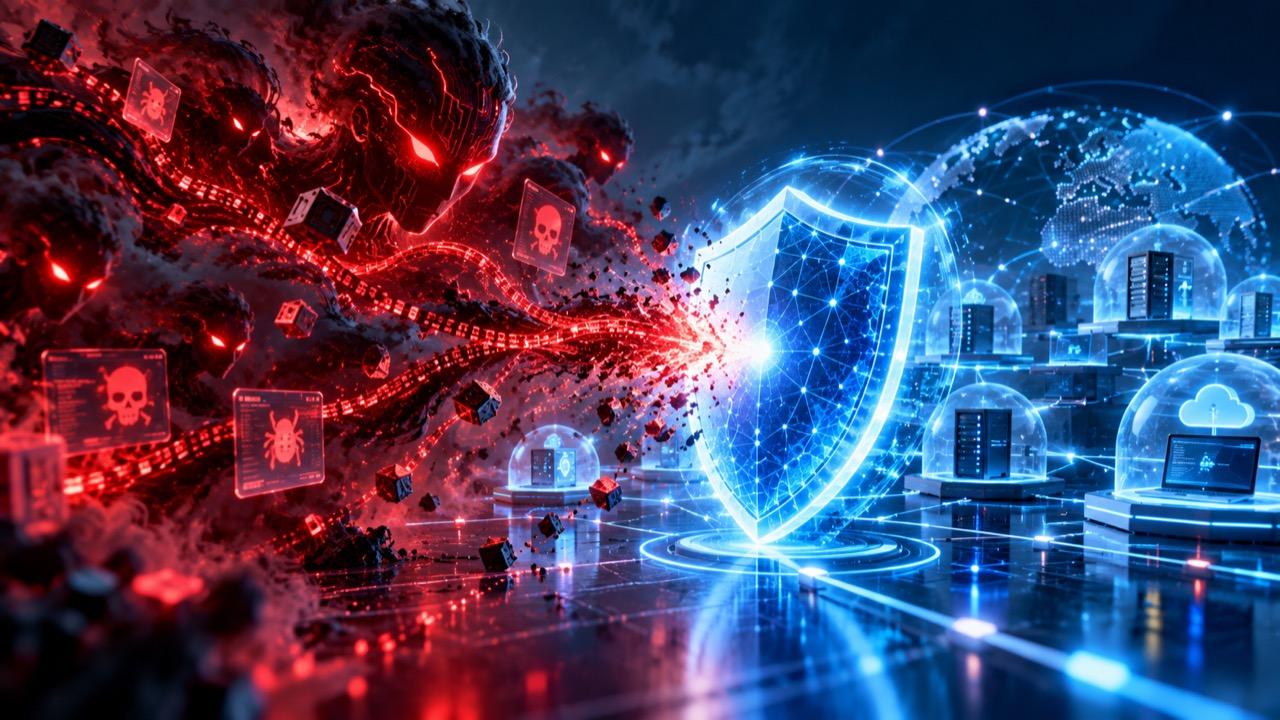
AI has made cyberattacks cheaper, faster and more convincing: phishing emails in perfect Hindi or English, cloned voices of business owners asking for urgent payments, and automated scanning that finds unpatched websites within hours. Small businesses are prime targets because they have money, data and fewer defences. The good news is that the basics still stop most attacks.
The threats that have changed
- Phishing without the giveaways: no spelling mistakes, personalised to your business, often referencing real suppliers or orders.
- Voice and video impersonation: a "call from the owner" or a "supplier" asking to change bank details. See my post on deepfake detection.
- Faster exploitation: automated tools find and exploit outdated WordPress plugins and exposed admin panels quickly.
- Supply-chain attacks through compromised software packages, like the npm worm campaigns this year.
- Attacks on your AI features: prompt injection that tricks chatbots and agents into leaking data or taking actions.
Defences that still work
- Verify payment changes by phone on a known number. Always, no exceptions.
- Two-factor authentication everywhere, ideally passkeys or an authenticator app rather than SMS.
- Keep websites updated: WordPress core, plugins and themes, and remove the ones you don't use.
- Backups you've actually tested restoring, stored separately.
- Least-privilege access: staff and plugins get only the access they need.
- Train your team with real examples of AI-generated phishing.
- Limit what AI features can do, and require human approval for sensitive actions.
Website security is a maintenance job
Most small-business website hacks come from neglected updates, not sophisticated attacks. At NextGen Fusion, our web development company in Lucknow, we offer maintenance plans that keep WordPress, WooCommerce and custom sites updated, backed up and monitored.