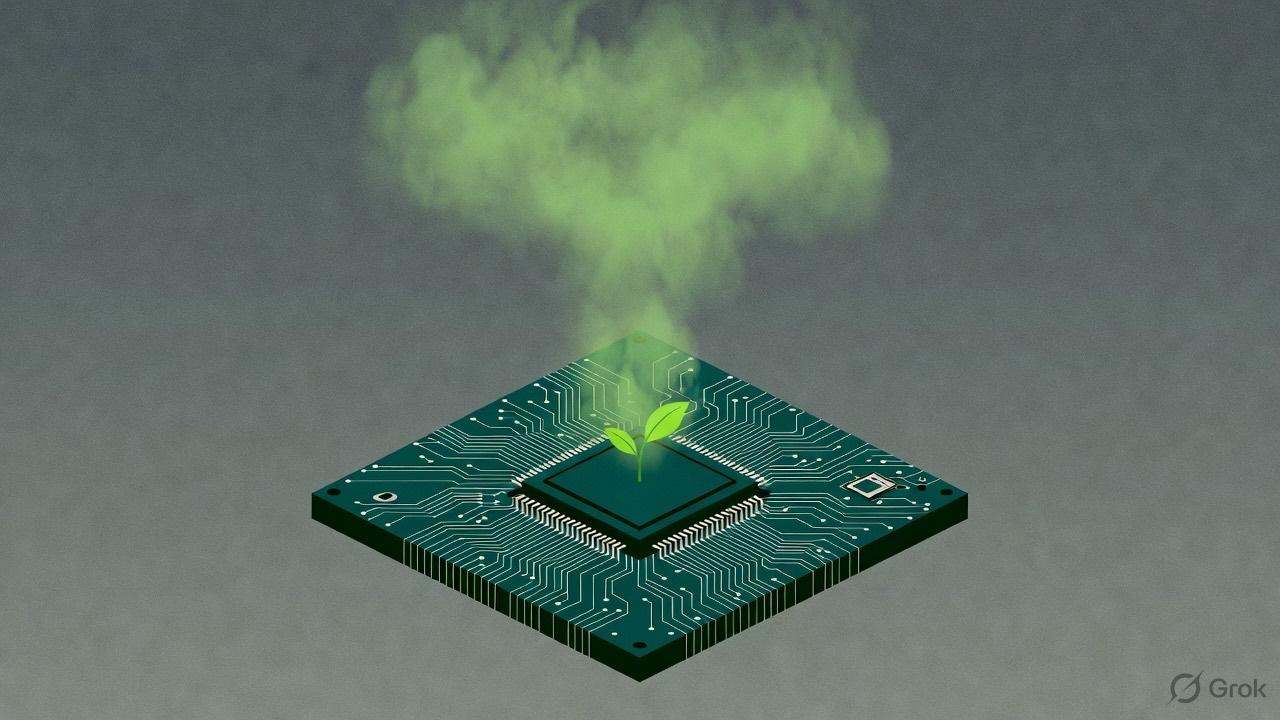
Making chips is getting more carbon-intensive, not less. TechInsights projects annual emissions from chip fabrication rising from about 190 million tonnes of CO2-equivalent in 2026 to around 247 million tonnes by 2030, and its 2026 outlook notes that emissions per chip are rising as designs pack in more silicon through advanced packaging. AI accelerators, with their huge dies and stacked memory, are a growing share.
Why emissions per chip are going up
- More silicon per chip: AI accelerators combine several large chiplets and high-bandwidth memory stacks, so one "chip" is really many.
- More process steps: advanced nodes and packaging need more lithography, etching and deposition, each using energy and specialised gases.
- Lower yields on cutting-edge processes mean more wafers made per working chip.
- Grid mix: fabs in regions powered by fossil fuels carry a heavier footprint.
These forecasts come from TechInsights' own models, mostly behind registration, and haven't been independently verified, so treat the exact numbers as indicative.
What helps
- Renewable power for fabs and data centres.
- Reducing high-impact process gases and capturing them.
- Better yields and longer hardware lifetimes.
- Efficient software: the most overlooked lever.
What software teams can actually do
You can't change how a fab is powered, but you can reduce how much compute your product needs:
- Use the smallest model that works. See small, distilled models.
- Cache and reuse AI results instead of regenerating them.
- Build lean websites: less JavaScript and smaller images mean less energy on every visit.
- Right-size hosting instead of over-provisioning servers.
Lean, efficient software
At NextGen Fusion, our web and software development company in Lucknow, we build fast, lightweight websites and cost-efficient AI features: good for your bills, and lighter on the planet.