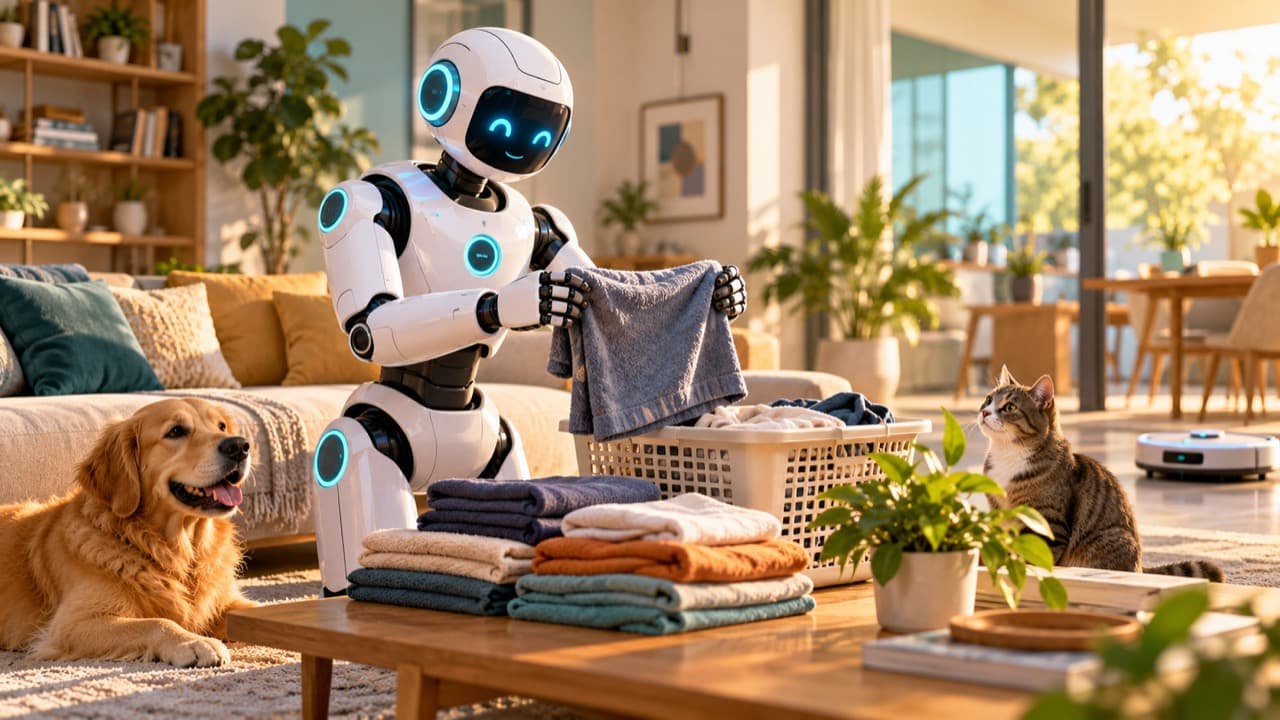
Humanoid robots are moving from impressive demos into early factory and warehouse pilots, while home robots are getting gradually smarter thanks to the same AI models that power chatbots. Tesla is planning dedicated chip production for its Optimus robot, as part of its Terafab plans, and several other companies are testing humanoids in controlled industrial settings. A robot that tidies your home unsupervised is still years away for most people.
What's real today
- Industrial pilots: humanoids and wheeled robots doing repetitive tasks like moving totes or loading machines in controlled environments.
- Warehouse robots (not humanoid) that are already everywhere: picking, sorting and transport.
- Home robots that vacuum, mop and mow, now with better object recognition and voice control.
- Robot "brains": AI models that understand instructions and plan actions, the biggest recent leap.
What's still hard
- Reliability: a robot that succeeds 95% of the time fails constantly at scale.
- Safety around people, especially children and the elderly.
- Dexterity: handling soft, varied, real-world objects.
- Cost: humanoids remain far too expensive for most homes and small businesses.
- Batteries: hours, not days, of operation.
What changes first
- Logistics and manufacturing, where environments are controlled and labour shortages are real.
- Specialised service robots for hospitals, hotels and inspection.
- Smarter home appliances long before general-purpose home humanoids.
Why software people should care
Every robot fleet needs software around it: monitoring dashboards, scheduling, maintenance tracking and integration with business systems. That's where most of the near-term opportunity sits for developers.
At NextGen Fusion, our software development company in Lucknow, we build dashboards, monitoring and integration software for operations teams.