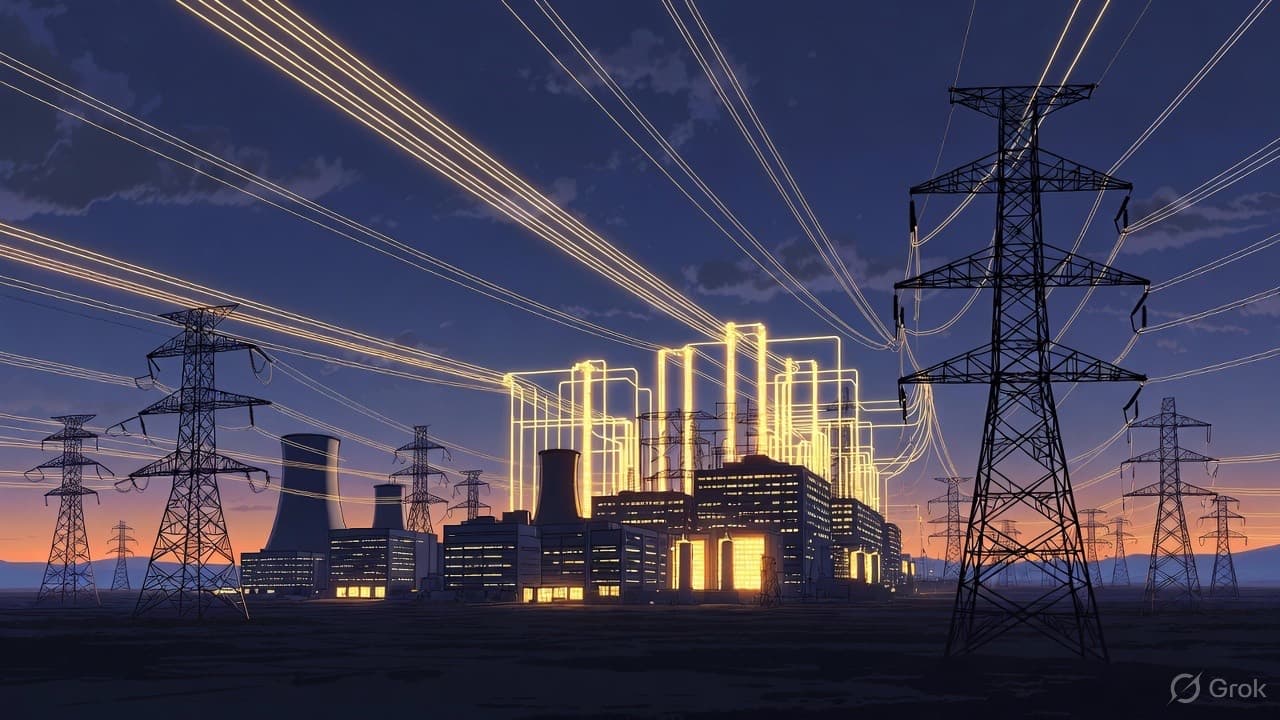
In 2026, the main limit on building AI data centres is often electricity, not chips. The International Energy Agency estimates more than 2,500 gigawatts of generation, storage and large-load projects are waiting in grid connection queues worldwide. In the US, the PJM grid came up about 6.6 gigawatts short in its December 2025 capacity auction, and Texas's grid operator ERCOT is managing a large-load queue of around 410 gigawatts, mostly data centres. Median waits for grid connections have stretched to several years in many regions.
Why AI is so power-hungry
- Dense hardware: AI racks draw many times the power of traditional servers, which is why liquid cooling is becoming standard.
- Always-on demand: training runs and inference serve around the clock.
- Scale: single AI campuses are now planned in gigawatts, comparable to a city.
What operators are doing
- Building where power is available, not just near users.
- On-site generation and long-term power contracts, including renewables, gas and interest in nuclear.
- Efficiency: better cooling, better chips and smarter scheduling.
- Waiting: equipment like large transformers has multi-year lead times.
Figures vary between sources, so treat the numbers as indicative of scale rather than precise.
What it means for businesses using AI
- AI prices may fall more slowly than chip improvements alone would suggest.
- Efficiency is a cost lever you control: smaller models, shorter context and caching all use less compute, and less power.
- Location and sovereignty matter: countries with available power, including India's growing data-centre market, attract AI capacity.
Efficient AI by design
At NextGen Fusion, our AI development company in Lucknow, we build AI features that use the smallest effective model and the least context needed. That's good for your bill, and better for the grid.