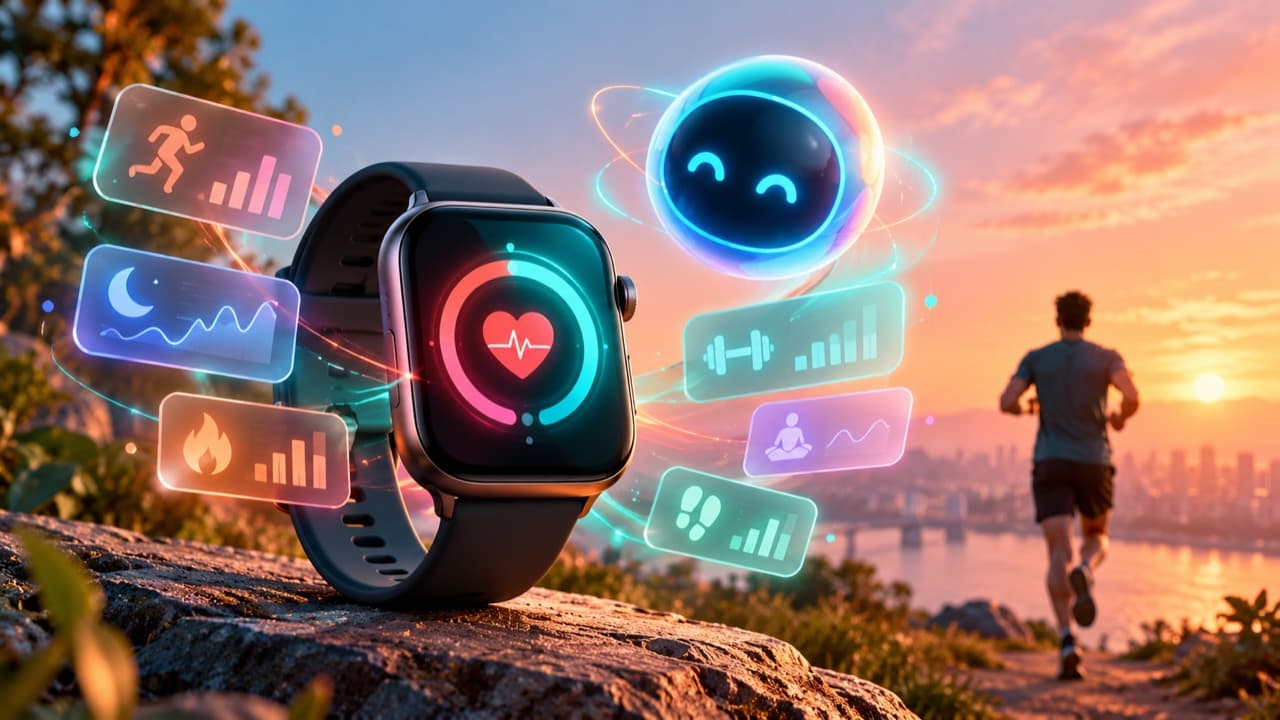
Wearables are evolving from step counters into AI coaches that read your sleep, heart-rate variability, training load and recovery, and tell you in plain language what to do today. Rings, watches and bands from most major brands now pair their sensors with AI assistants you can ask questions like "why was my sleep bad?" or "should I train hard today?".
What AI adds to a wearable
- Interpretation, not just numbers. "Your recovery is low because of late meals and short sleep" beats a chart.
- Personal baselines: advice based on your normal, not population averages.
- Adaptive plans: workouts that adjust to your recovery and schedule.
- Conversational answers to questions about your own data.
Where it falls short
- Sensor accuracy limits everything. Wrist and finger sensors estimate. They don't measure like medical equipment.
- Generic advice dressed up as personal is common in cheaper products.
- Not medical advice. Good products say so clearly and suggest a doctor when something looks off.
The privacy trade-off
Health data is among the most sensitive personal data there is. Before buying, check:
- Where your data is stored and whether it's used to train models.
- Whether you can export and delete it.
- What's shared with insurers, employers or advertisers.
In India, the Digital Personal Data Protection Act sets expectations for how companies handle personal data, and health-tech businesses should design for it from the start.
For health and fitness businesses
Gyms, trainers, physiotherapists and wellness brands can use the same ideas: AI-assisted plans, progress tracking and member apps. The hard part is handling health data responsibly.
At NextGen Fusion, our web and app development company in Lucknow, we build fitness and wellness platforms, including booking, memberships and progress tracking, with privacy designed in.