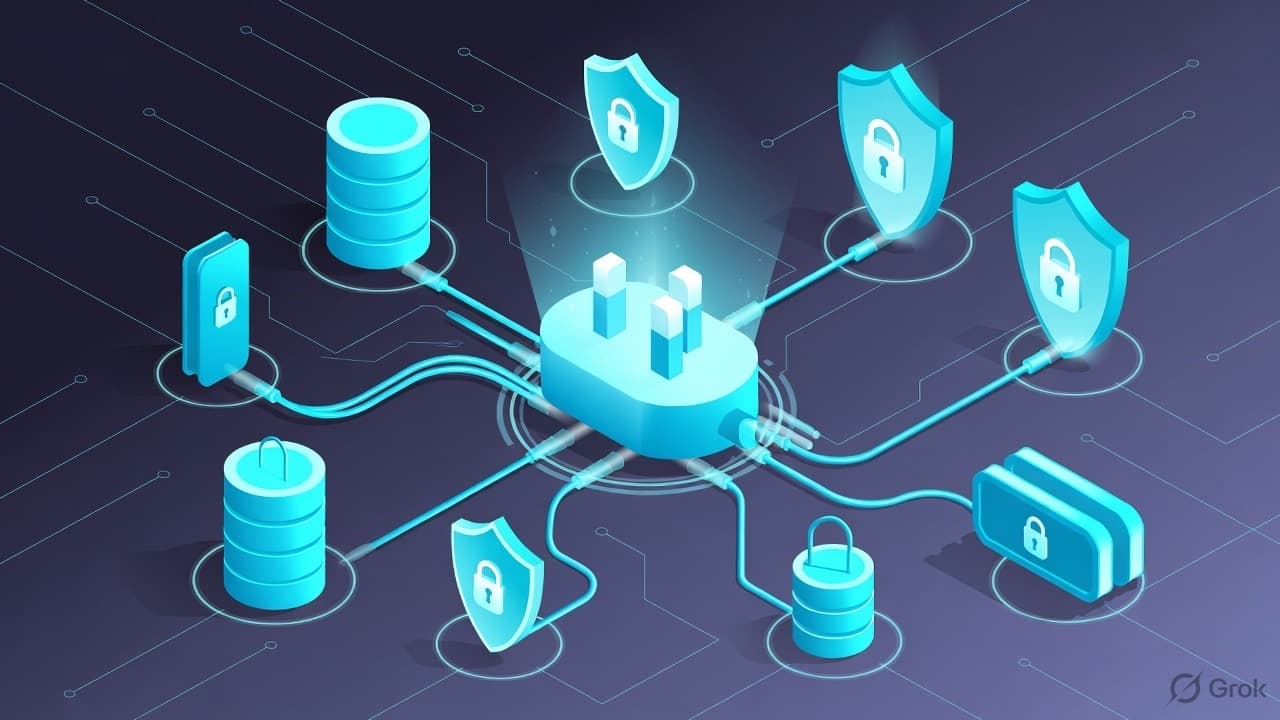
The Model Context Protocol (MCP) has become the standard way to connect AI assistants and agents to tools and data (your database, GitHub, Slack, files), and its rapid adoption has brought a wave of security problems. Researchers reportedly filed more than 30 CVEs against MCP servers, clients and infrastructure in just the first two months of 2026, and OWASP has published an MCP Top 10 dedicated to this new attack surface.
Why MCP is a security-sensitive layer
An MCP server gives an AI agent abilities: read files, query databases, send messages, run commands. If the agent can be tricked, or the server is badly built, those abilities get used against you.
The common failure patterns
Most serious MCP vulnerabilities have come from ordinary implementation mistakes rather than flaws in the protocol itself:
- No authentication on servers exposed to a network.
- Missing input validation, leading to command injection and path traversal.
- Over-broad permissions: a "read docs" server that can also write and delete.
- Trusting tool descriptions blindly: a malicious server can describe itself in ways that manipulate the agent.
- Prompt injection through data: an agent reads a document or web page containing instructions and follows them.
- Too many servers connected at once, which compounds risk across tools.
A well-known example is CVE-2025-6514 in the widely used mcp-remote package, rated 9.6 (critical).
Security basics for MCP
- Least privilege: each server gets only the permissions its task needs. Prefer read-only.
- Authenticate every network-exposed server, for example with OAuth.
- Validate every input as if a hostile user typed it, because effectively one might.
- Require human approval for destructive or external actions: sending, paying, deleting.
- Install servers only from sources you trust, and pin their versions.
- Log every tool call for audit and debugging.
Building agents that are safe to deploy
At NextGen Fusion, our AI development company in Lucknow, we build MCP servers and AI agents with authentication, scoped permissions and approval steps, because an agent with access to your business systems needs the same care as any other admin tool.