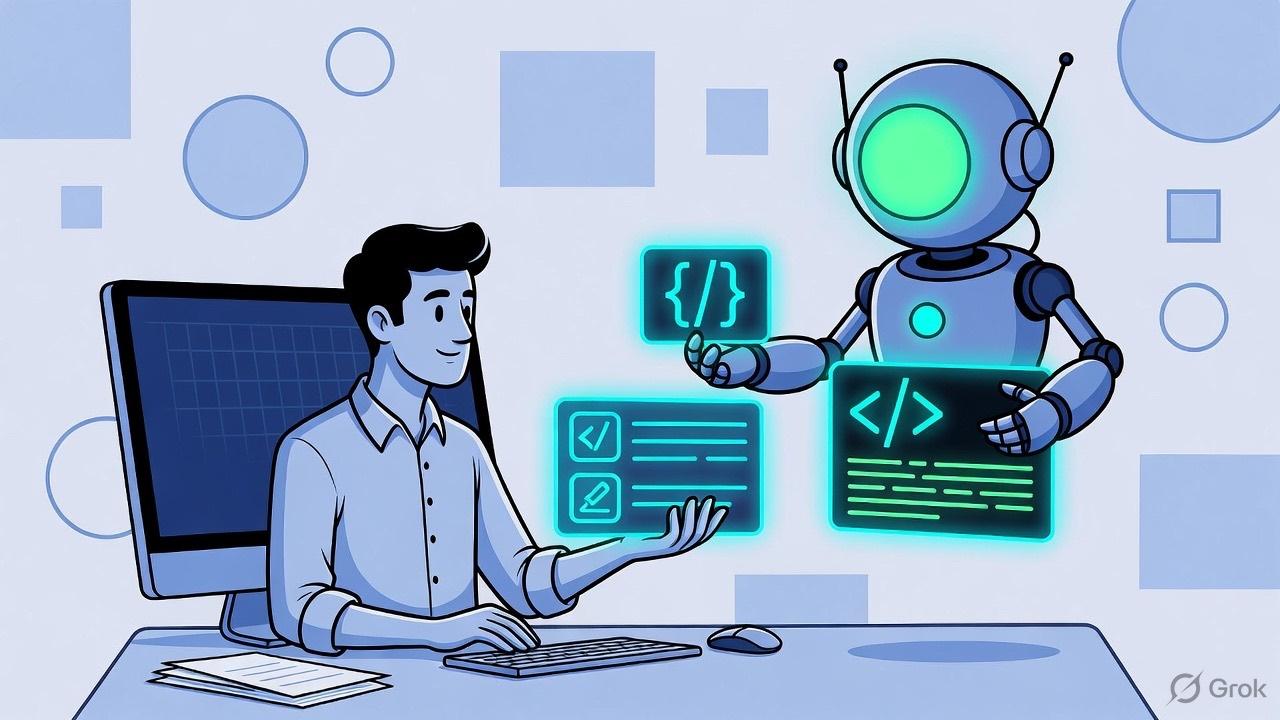
"Vibe coding" means building software by describing what you want to an AI and accepting the code it produces, often without reading it closely. It's genuinely transformative for prototypes, internal tools and learning, and it has started a real debate about code quality, security and maintainability once that code reaches production. Both sides have a point.
Where vibe coding shines
- Prototypes and demos: test an idea in an afternoon.
- Internal tools with few users and low risk.
- Learning: seeing how something could be built.
- Throwaway scripts for one-off data tasks.
Where it goes wrong
- Security holes: missing authentication checks, exposed API keys, SQL injection and over-permissive access, all of which look fine until someone attacks them.
- Invisible complexity: code nobody understands, so nobody can safely change it.
- Hallucinated dependencies: packages that don't exist, or worse, malicious lookalikes. See npm supply-chain attacks.
- Payments and data mistakes that cost real money.
- No tests, so every change risks breaking something else.
A classic failure: the prototype works beautifully, but nobody checked authorisation, so every customer can see every other customer's orders.
A sensible middle ground
- Vibe code the prototype, engineer the product. Once real users and real data arrive, review and harden everything.
- Read the code the AI writes for anything touching auth, payments or personal data.
- Add tests and CI before the codebase grows. AI can help write them.
- Use AI review and human review together. See AI code review tools.
- Keep architecture decisions human.
From prototype to production
At NextGen Fusion, our software development company in Lucknow, we take vibe-coded prototypes and turn them into secure, tested, maintainable products, without throwing away what already works.