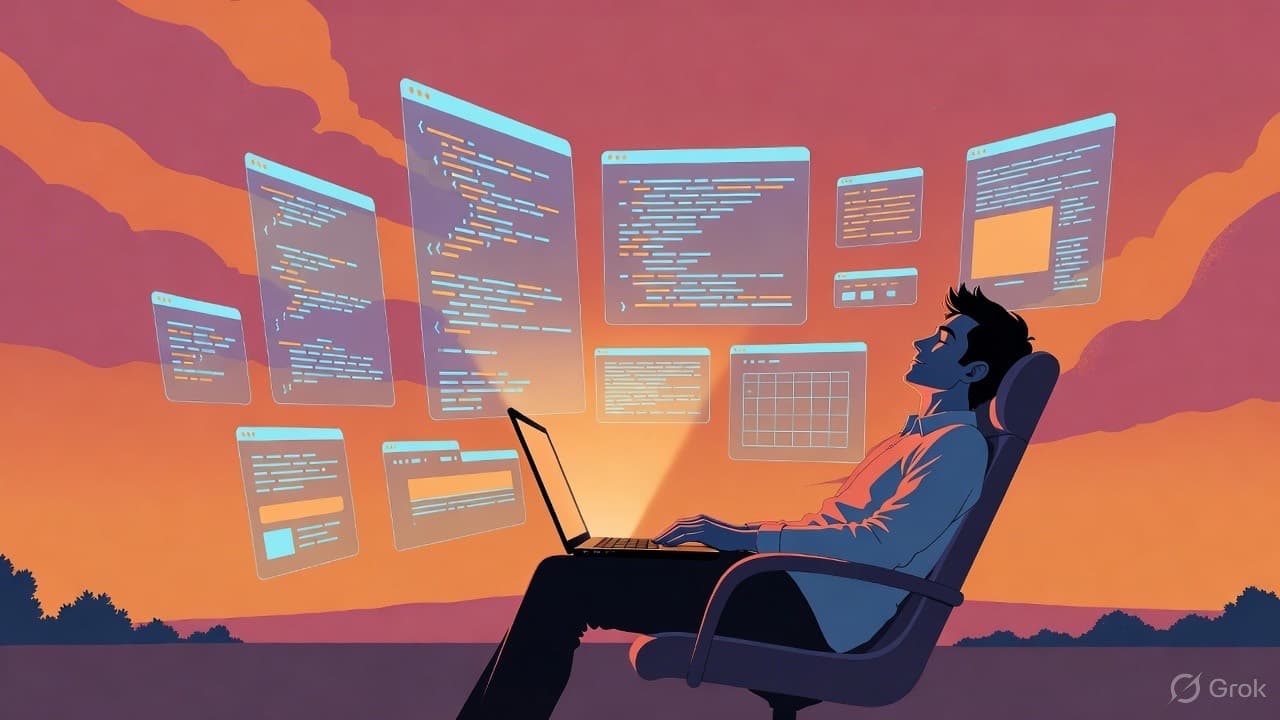
Copilot task delegation means assigning an entire task (a GitHub issue, a bug or a refactor) to an AI coding agent that works in the background and comes back with a pull request for you to review. It's a step change from autocomplete. "Stop prompting, start delegating: configure Copilot to own the work" is literally a session title at GitHub Universe 2026, which tells you where the tooling is heading.
How delegation works
- You write or pick an issue with a clear description and acceptance criteria.
- You assign it to the agent.
- The agent works in an isolated environment: reads the codebase, makes changes, runs tests.
- It opens a pull request with its changes and a summary.
- You review, request changes, or merge.
What to delegate
Good candidates:
- Well-specified bugs with a reproduction.
- Adding tests to existing code.
- Mechanical refactors: renames, API migrations, dependency upgrades.
- Small features that follow an established pattern in your codebase.
- Documentation updates.
Keep for humans:
- Architecture decisions and new abstractions.
- Anything touching payments, authentication or security boundaries without careful review.
- Vague tasks. If you can't write clear acceptance criteria, the agent can't hit them.
Making it work well
- Write better issues. The issue is now the prompt: include context, constraints and how to verify it.
- Give the agent project instructions describing conventions, commands and gotchas.
- Have strong tests. Agents are only as reliable as the checks that catch their mistakes.
- Review like it's a junior colleague's PR: read every line, and run it.
How we use it
At NextGen Fusion, our software development company in Lucknow, we delegate well-scoped tasks like tests, upgrades and repetitive changes to coding agents. Humans own the architecture and review every change. That's how we deliver faster without lowering standards.