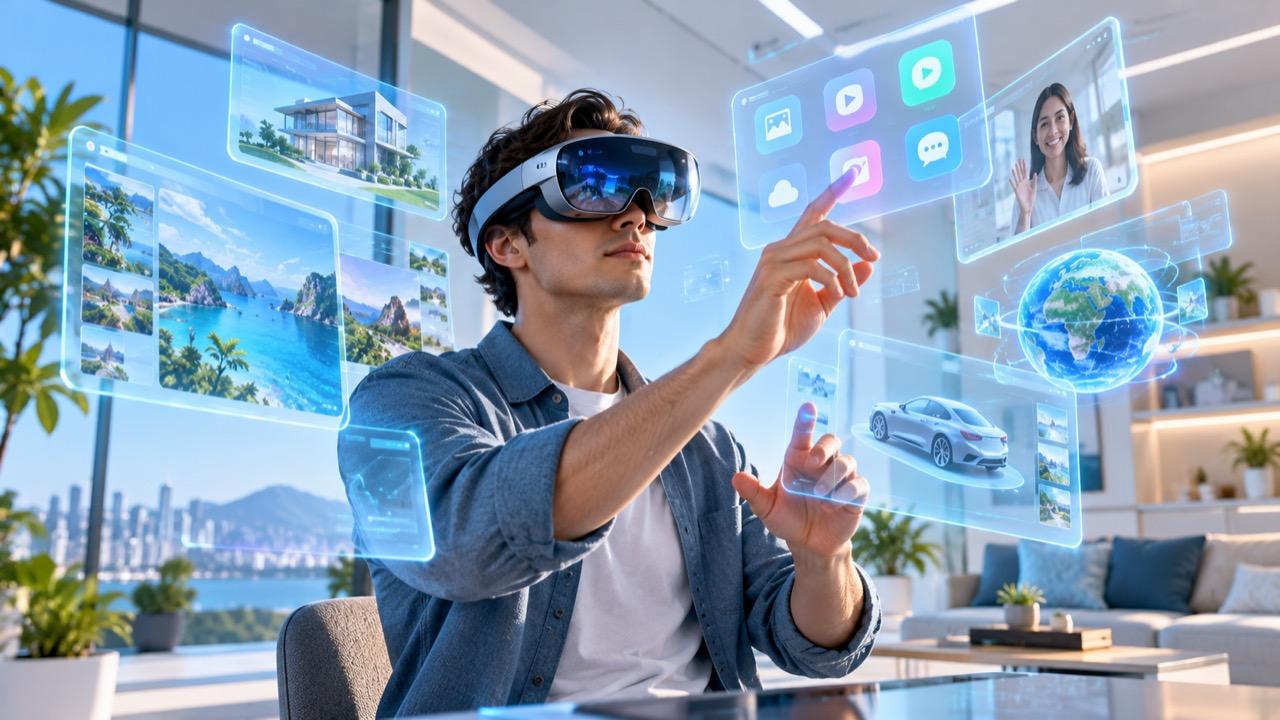
After Apple's Vision Pro showed what high-end mixed reality could do, but at a price and weight most people wouldn't accept, the industry's momentum has shifted to lightweight smart glasses: cameras, microphones and an AI assistant in frames that look like normal glasses. Meta leads with its Ray-Ban and Oakley lines, Google is pushing Android XR with partners, and Apple's own glasses are reportedly slipping to late 2027.
Two paths for XR
- Headsets (Vision Pro, Quest): immersive and powerful, but heavy and used in sessions. Strong for training, design, gaming and specialised work.
- Glasses: all-day wearable, light, AI-first, often without a display at all, or with only a small one. The mass-market bet.
What AI changes
The breakthrough isn't the hardware. It's that multimodal AI can now see what you see and answer questions about it: "What plant is this?", "Translate this menu", "Remind me where I parked". That makes glasses useful without full AR graphics.
What it means for businesses
- Visual search grows: customers pointing at a product and asking where to buy it. Your product data and images need to be findable.
- Local discovery through assistants: accurate business profiles and structured data matter more.
- Hands-free work: field service, warehouses and healthcare are early business use cases.
- Training and remote assistance with headsets in manufacturing and maintenance.
What not to do yet
Don't build a dedicated glasses app unless you're in a hands-free industry. For most businesses, the best preparation is a fast, structured website that AI assistants can read, which also helps you in Google and AI search today.
Future-ready websites
At NextGen Fusion, our web development company in Lucknow, we build websites with clean structure and rich product data that work across search engines, AI assistants and new devices.